The pump and water flutes for Tambour de Pan
Making the flutes DIY is possible, but it is quite tricky. Getting a good-sounding instrument depends on very small and precise details which are difficult to control.
With Aurélien Gignoux, the percussionist who created the piece, we made the first performance and recording of the piece using a DIY instrument that I built for the occasion. After the premiere of the piece, we worked with the instrument maker Nicolas Bras, who specializes in DIY/crazy instruments made from all types of materials including PVC pipes. He made a version of the pump flutes and water flutes using PVC pipes and 3D printed pieces and whistles which sound absolutely great. The instrument is way louder than the DIY version I made and matches the volume of the drum in the piece better. This is the instrument that Aurélien is using now when he plays the piece.
My strong advice, if you want to play the piece, is to get the instrument directly from Nicolas Bras, you can buy it from his website here : https://instrumentsbybras.com
If you want to try the DIY way, which is quite fun after all, there are many possibilities on how to make the flutes. Here is one example from Nicolas Bras, there are probably many more on the internet!
DIY / the Nicolas Bras way
Nicolas Bras uses a very efficient DIY way of making PVC flutes. Here is a video about flute making he posted on his YouTube channel (take the chance to watch his other videos, which are great!).
Adjustments for Tambour de Pan
You can follow the steps described in the video to build the water and pump flutes.
For Tambour de Pan, you need to use 25mm wide pipes which is a standard size in France. With the different metric system in the US, you have to find something that approaches this size the most. For the little piece of wood to fit into the tube, you can also use a wine cork which usually matches perfectly the 25mm diameter.
Pump flutes
The pump flutes have to match a D, 4th line in the treble clef. The tube length is about 26.5 cm; this may vary slightly depending on how you constructed your flute. Ideally, cut the tube a little longer and then gradually shorten it until you achieve the desired pitch. If the note is too high, there is no turning back! The pitch of each flute, in each triple-flute set, must be slightly different (and thus their lengths as well) so that, when played together, they produce audible beats. The pitch difference between the three flutes should be between 20 and 40 cents maximum. For example: first flute D-20 cents / 2nd flute D / 3rd flute D+20 cents.
This is how the three flutes should sound together, with clearly audible beatings.
To connect the three tubes, you need T-connectors. Make sure there is no air leakage. Insert your flute, with the whistles facing downwards, into the connector (you don't need the plastic ring used in the video). The end of your piece of wood/cork has to match perfectly the edge of the T-connector.
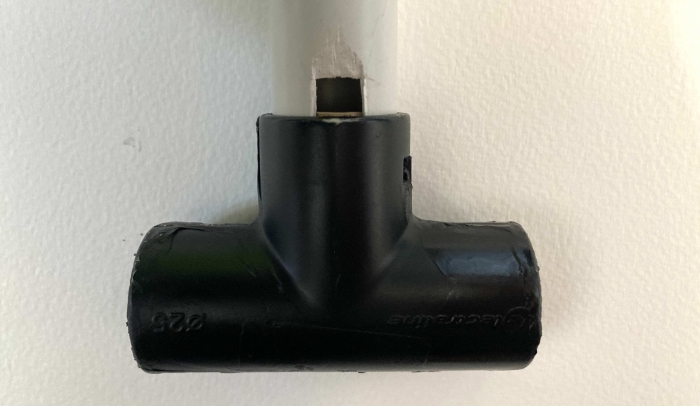
It has to be very tight and not moving because it could affect the sound. If the connection between the T-piece and the flute is too loose, you can add adhesive tape to the flute to slightly increase its thickness.
Connect together two "T" and one "L".
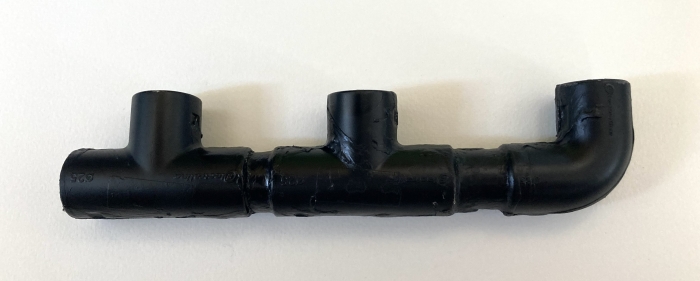
Then add your three flutes and connect it with the foot pump tube. We used a 2,5 liter air foot pump, but you can try other types of pump depending on the control you want to have. ------>
https://www.decathlon.fr/
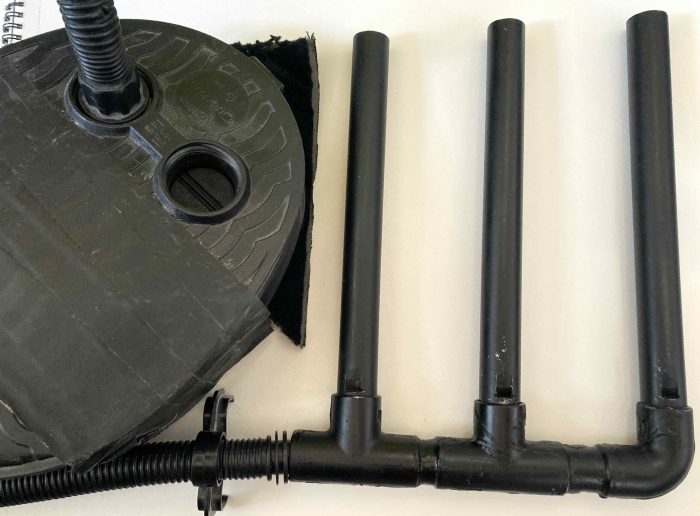
Now you must construct shutters located near the bevel that can mute each of the flutes. I use Blu-Tack to make it airtight and that it stays in place.
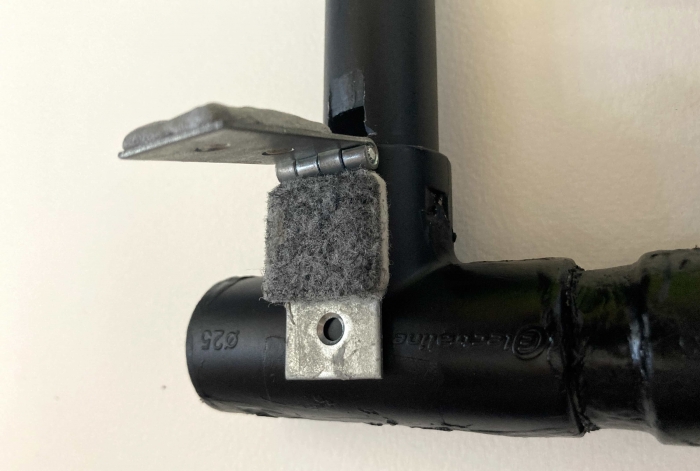
Also a valve for the end of the tube, to seal the flute and produce a higher-pitched sound. I used the same system.
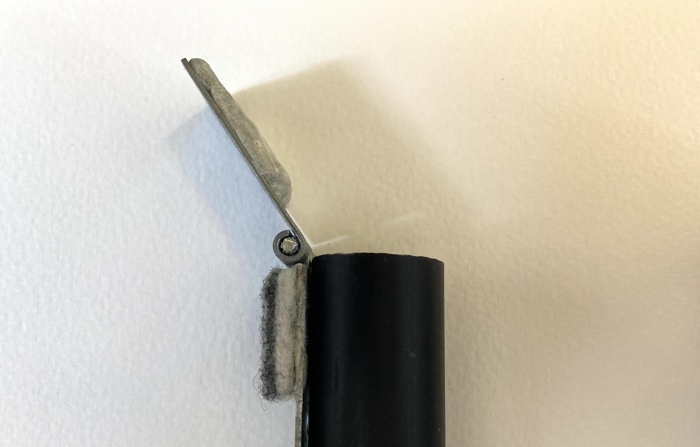
You will need 4 PVC extensions to lower the notes of the flutes: two 8cm extensions, one 20cm, and one 23 cm (see score for the desired pitches). Again, it is best to cut them longer initially and then fine-tune the length by trimming them little by little.
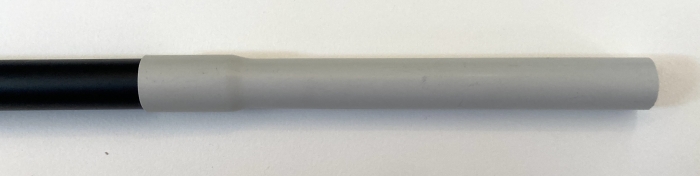
Water flutes
The water flutes are made exactly the same way, except the pitch is a bit lower. It has to be tuned A and B,
middle of the treble clef. So the length of the tube would approximate 37cm for the A and 34cm for the B. Cut them longer and fine-tune the length after depending on the pitch.
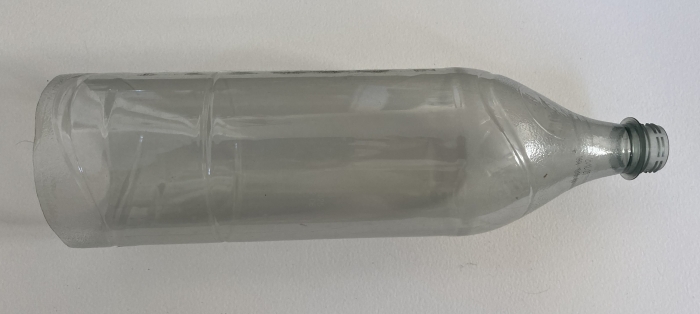
You will need to cut a bottle at the end opposite the neck. I use 1.5-liter Schweppes bottles because they are very smooth and the shape of the neck works well. But you can certainly use other brands—no product placement here!
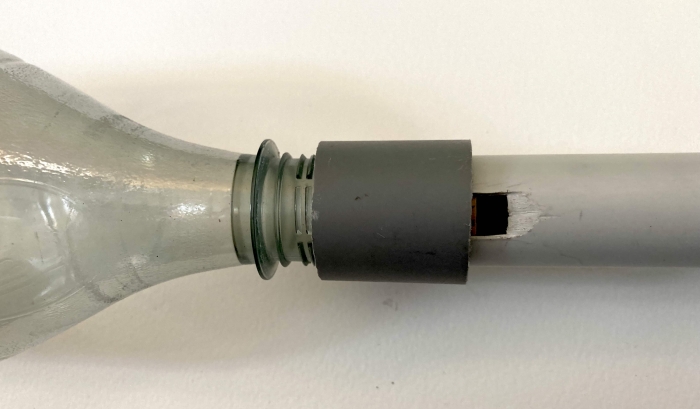
You will need to use a system to connect the neck of the bottle to the whistle, with the whistle facing downwards. This system must be perfectly airtight. I used a piece of PVC with a larger diameter, and I had to remove the small plastic ridges on the bottle neck that were used to screw on the cap.
You can contact me if you have any questions: theomerigeau@yahoo.com
All the best